
12 Greater Philadelphia Organizations Doing the Work That Actually Moves Communities Forward

Philadelphia has never needed more people pretending to care. What it needs is infrastructure: organizations that protect vulnerable people, build community power, fight displacement, create cultural space, and make it harder for whole neighborhoods to be erased in plain sight.
That is what makes this list matter.
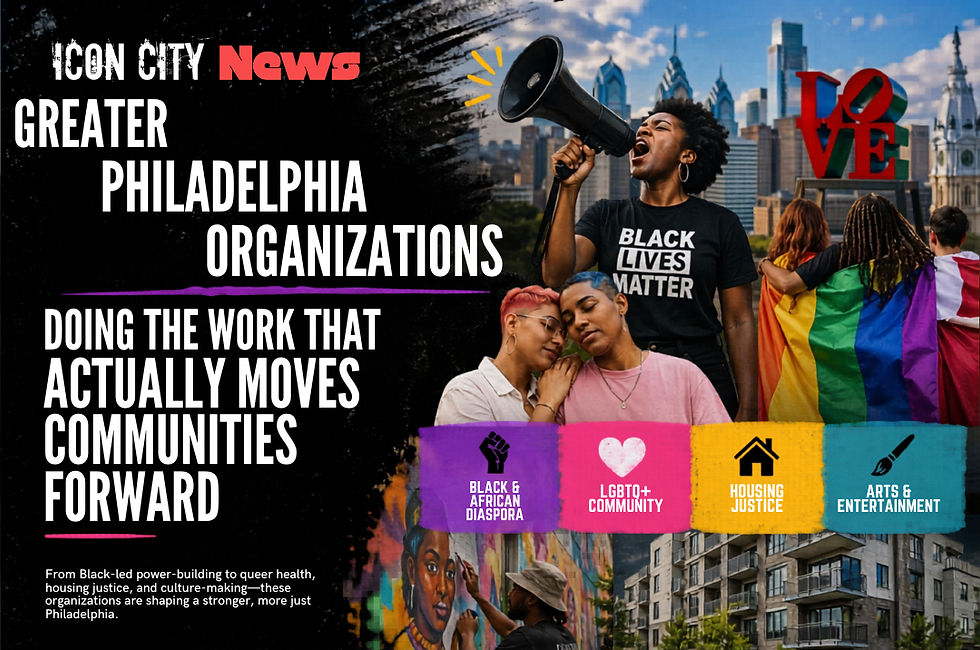
Instead of forcing every worthy organization into one vague bucket called “community work,” this roundup leans into the mix that actually reflects the city and the kind of coverage that deserves more oxygen: Black and African-diaspora organizations, LGBTQ+ institutions, housing-focused groups, and arts-and-entertainment builders across Greater Philadelphia. The result is a stronger list — one that reflects service, advocacy, survival, and joy, all in the same civic ecosystem.
1. Urban League of Greater Philadelphia
The Urban League of Greater Philadelphia is the kind of institution that earns respect because its reach is not narrow. Since 1917, it has worked to close equality gaps and expand opportunity, pairing direct service with advocacy across education, workforce development, reentry, housing, entrepreneurship, health equity, and civic power. In a city where inequality is old, layered, and deeply racialized, that kind of broad-spectrum Black institution-building still matters.
2. Philadelphia Black Giving Circle and Network
Some organizations provide services. Some build movements. Philly Black Giving Circle and Network helps build the money pipeline behind the movement. Its model is rooted in collective Black giving, channeling donor resources into nonprofits doing meaningful work in Black communities. That makes it more than a charitable network — it is part of the long game of Black civic and philanthropic power in Philadelphia.
3. OIC Philadelphia
OIC Philadelphia belongs on this list because economic justice cannot just be a slogan people wear to panels. The organization has been delivering job training since 1964 and says its mission is to create thousands of jobs annually for North Philadelphians through workforce development. That matters because careers, credentials, and stability are still some of the clearest ways communities push back against generational exclusion.
4. ACANA
ACANA brings an essential African and Caribbean immigrant lens to Greater Philadelphia’s community landscape. Based in Philadelphia, the organization serves African and Caribbean immigrants through social and legal services, health programs, community development, and arts-and-culture events. That combination of practical support and cultural grounding makes ACANA especially important in a city where Black life includes many diasporas, not just one story.
5. William Way LGBT Community Center
William Way remains one of the city’s most important queer institutions because it does more than host events. It functions as memory, meeting place, archive, and refuge. The center’s offerings include a large lending library, LGBTQ+ history archives, public art and exhibition space, and community meeting areas — the kind of physical and cultural infrastructure that helps a community know itself and keep going.
6. GALAEI
GALAEI stands out because it is explicit about who it is for and what it is fighting. The
organization says it serves Queer, Trans, Black, Indigenous, and People of Color communities through support, advocacy, and radical social justice work. In a moment when too much LGBTQ+ language gets flattened into corporate sameness, GALAEI represents something sharper: queer organizing that is rooted in race, survival, and power.
7. Mazzoni Center
Mazzoni Center makes this list because queer health care is community infrastructure, period. The center says it has been Philadelphia’s primary comprehensive LGBTQ+ health and wellness center since 1979 and now serves more than 15,000 patients a year in an affirming environment. That scale, longevity, and specificity matter in a country where access to competent care still depends too much on zip code, politics, and luck.
8. The Attic Youth Center
The Attic earns its place because LGBTQ+ youth deserve institutions built with them in mind, not as an afterthought folded into adult programming. The organization’s mission is to help LGBTQ+ young people develop into healthy, independent, civic-minded adults within a safe and supportive community while promoting broader social acceptance. That is not just youth work. That is future work.
9. Philadelphia Coalition for Affordable Communities
Housing conversations in Philadelphia can get abstract real fast. PCAC keeps the issue grounded in policy, affordability, and people. The coalition says it advocates for legislation addressing the city’s housing and food affordability crises and notes that it has helped secure more than $800 million in new city funding for affordable housing over the past 23 years. That is the kind of structural work that changes outcomes, not just headlines.
10. Affordable Housing Centers of Pennsylvania
Affordable Housing Centers of Pennsylvania brings the practical side of housing justice into focus. Its mission is to increase and preserve homeownership opportunities for low- to moderate-income households and communities of color in Philadelphia and Pennsylvania, while also helping residents navigate foreclosure prevention and rental eviction. In plain terms: this is the kind of work that keeps people housed and gives families a better shot at staying rooted.
11. BlackStar
BlackStar is one of the strongest arts-and-entertainment picks in the region because it does not treat culture like decoration. Through initiatives such as the Philadelphia Filmmaker Lab, it supports emerging and mid-career Black, Brown, and Indigenous filmmakers in Greater Philadelphia with mentorship, funding, and critical feedback. That is arts infrastructure with a purpose — not just showcasing talent, but helping build the conditions for it to thrive.
12. Scribe Video Center
Scribe Video Center has long understood that media can be both art and civic testimony. Founded in 1982, the organization provides training in film, video, and audio production, and its mission explicitly links digital media to creative expression and progressive social change, especially for people and community groups historically denied access to production tools. In a city full of stories, Scribe helps more people tell their own.
Philadelphia is full of institutions that say they care about community. These twelve organizations show what it looks like when that care takes form — in funding, health care, youth support, legal access, housing advocacy, cultural production, and the stubborn refusal to let whole communities be treated as disposable.
Some are protecting people from harm. Some are building the next generation. Some are making sure the city’s cultural voice still belongs to the people who live here.
All of them are doing work worth paying attention to.





Comments